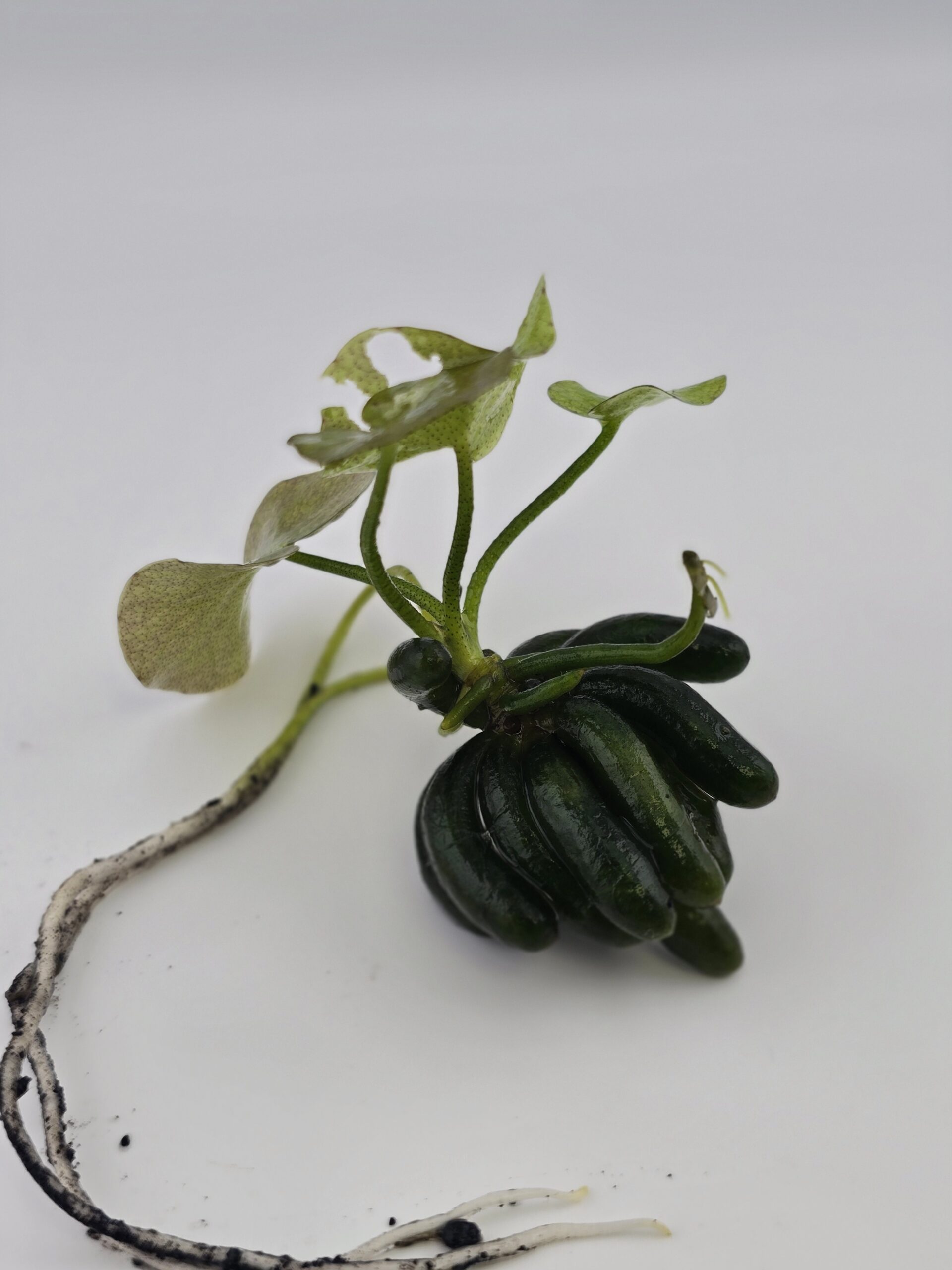
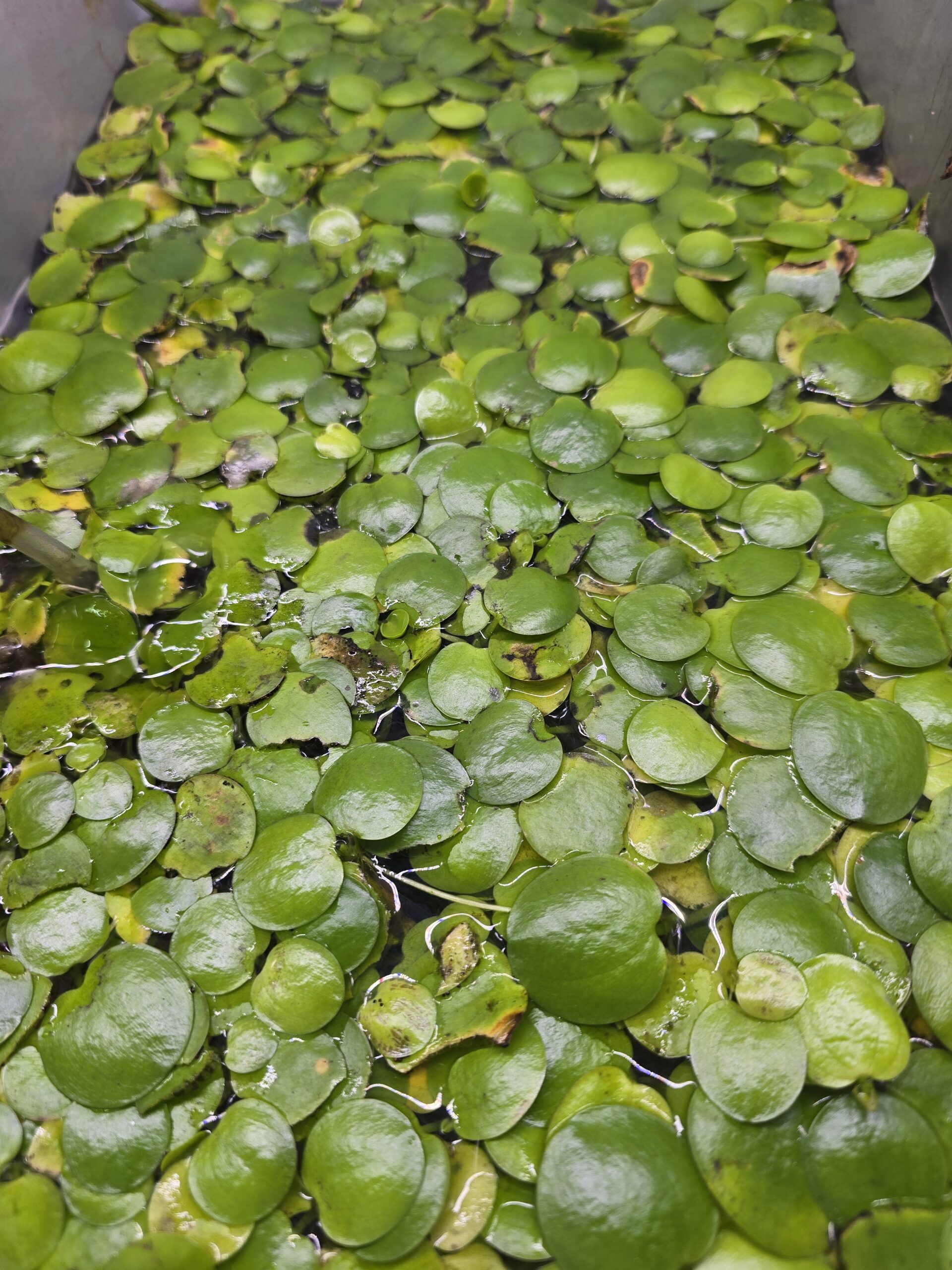
Description Amazon Frog bit (scientific name: Limnobium laevigatum or Hydrocharis morsus-ranae) is a popular floating aquatic plant often chosen for both ponds and aquariums. 1. Planting Simply place the frog bit onto the surface of the water, ensuring the roots are submerged and the top surface of the leaves remain dry. Avoid wetting the leaves during planting and during any maintenance activities, as excessive moisture can lead to rotting. 2. Water conditions Temperature: Frog bit thrives in temperatures between 64-86°F (18-30°C), making it suitable for most tropical setups. pH Level: Frog bit is adaptable and can tolerate a pH range of 6.0-7.5. Hardness: Soft to moderately hard water is preferred (2-15 dKH) Nutrients: Frog bit is a heavy feeder and absorbs nutrients from the water column through its roots. Supplement with a liquid fertilizer containing essential nutrients like nitrogen, phosphorus, and potassium, especially if your aquarium has a low bio load. However, if your tank has a high bio load (many fish, snails, etc.), external fertilization may not be strictly necessary. Flow: Avoid strong currents that can damage delicate roots or submerge leaves. Create a designated “roped off area” using tubing if needed to prevent excessive movement 3. Lighting Frog bit thrives in moderate to high lighting conditions. Aim for 8-10 hours of light per day. Avoid lighting sources with very high intensity as they can burn the leaves. 4. Maintenance and propagation Pruning: Remove excess or decaying leaves to prevent overcrowding and maintain the plant’s appearance. Propagation: Frog bit reproduces through vegetative propagation, meaning it can produce new plants from its runners. Daughter plants can be separated and replanted when they develop. 5. Potential challenges Rotting leaves: Occurs if the top surface of the leaves comes into contact with water. Overcrowding: Frog bit has a fast growth rate and can quickly cover the water surface, blocking light to other plants. Manual removal is the easiest way to control this. Nutrient deficiency: Yellowing or browning leaves can indicate insufficient nutrients. Invasive potential: Frog bit can become invasive in outdoor ponds and waterways, potentially harming native ecosystems. It’s crucial to dispose of removed plants responsibly and never release them into natural water bodies. By following these tips, you can successfully grow and maintain frog bit in your aquarium or pond and enjoy its aesthetic appeal and ecological benefits