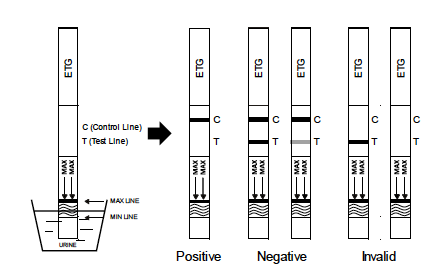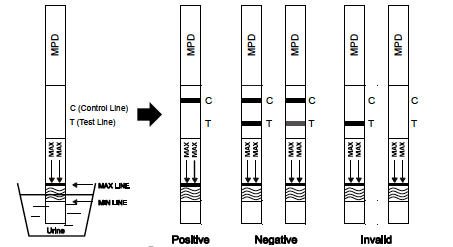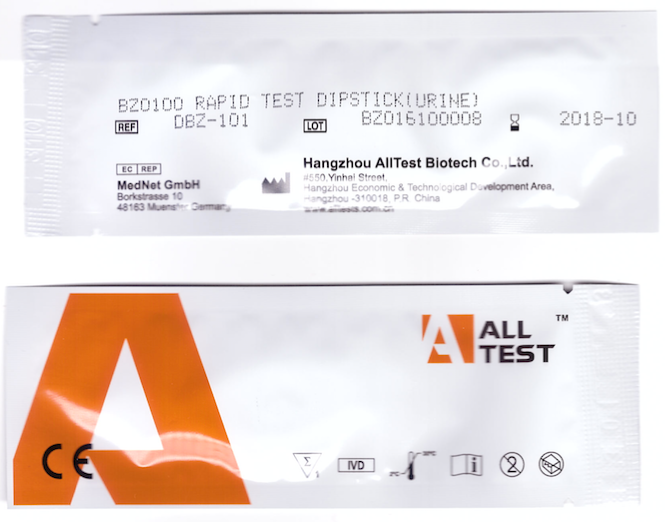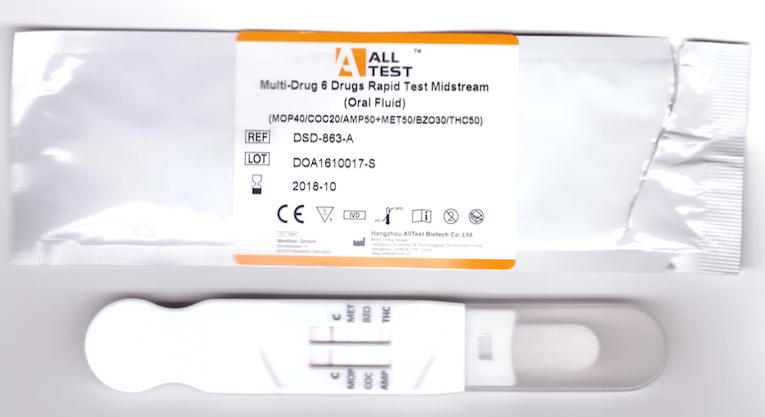
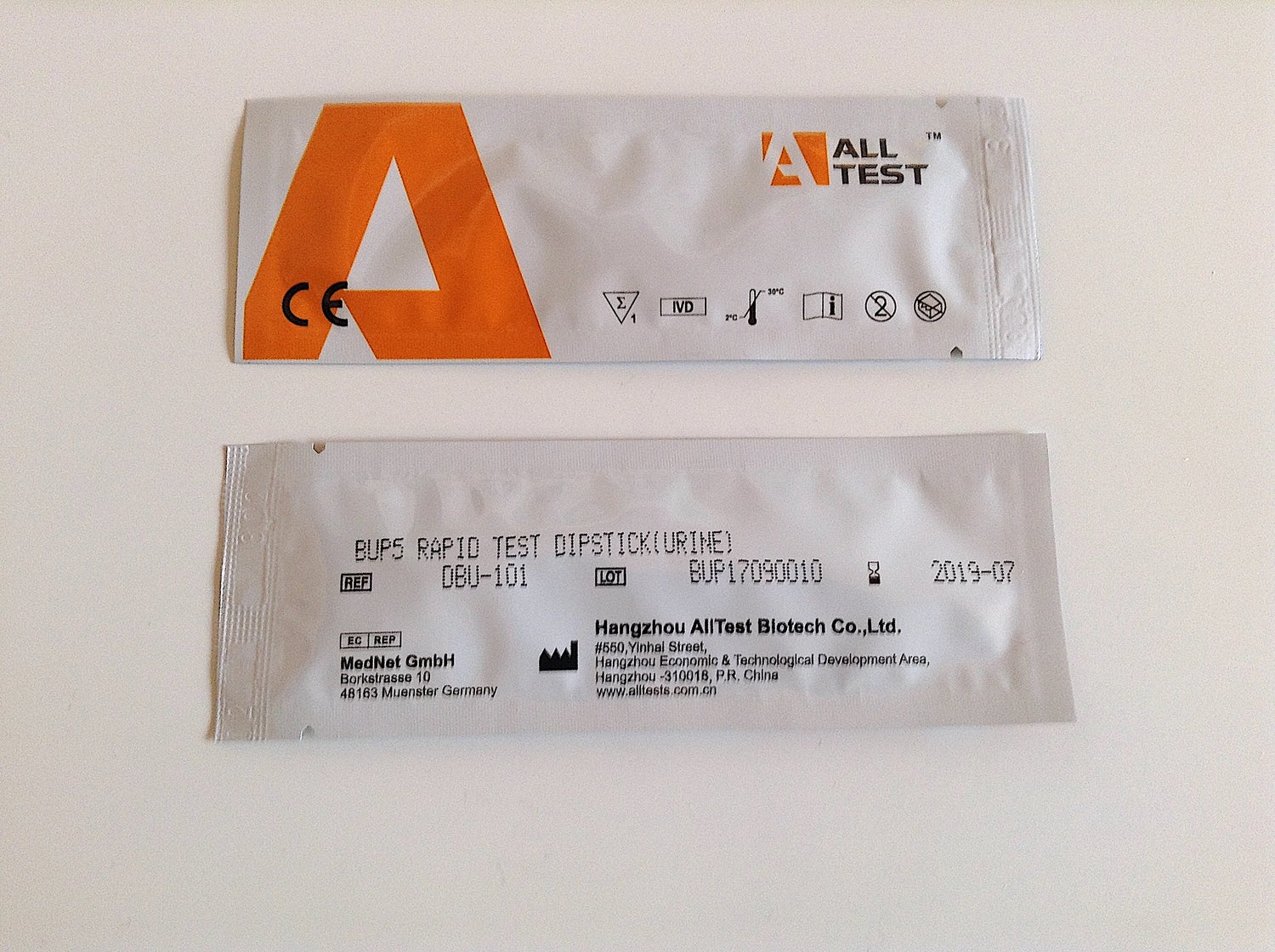
In order to purchase without VAT, enterprises, excluding the Finnish ones, are kindly asked to make the orders and contacts via e-mail to [email protected]. Buprenorphine, developed for medicare to get rid of opioid addiction, has become one of the most popular street drugs. Its effects are similar to those of opiates. Use of buprenorphine as a drug can be detected from urine sample still a week afterwords. The sensitivity of the test strip is 5 ng/ml. Buprenorphine is a medication used to treat opioid dependence; however, it is itself addictive and is also a common barter item for amphetamines on the street. A sensitive (cut-off 5 ng/ml) dipstick test can detect it in urine even a week after discontinuing use. All rapid test formats for drugs and misused chemicals include two internal controls. When the C line (control line) appears, it indicates that the sample was valid for testing, the test was performed correctly, and the test functioned properly. Buprenorphine is immobilized on the T-zone of the test strip; as the fluid flows past, it carries along antibodies that recognize and bind to buprenorphine from the reagent pad in the sample, forming a reddish-brown T-line. The binding capacity of the antibody binding sites is specified as the test’s cut-off value (here, 5 ng/ml). If the sample contains no buprenorphine at all, all binding sites for that antibody are free, and the particles bind to the T-zone. When the buprenorphine concentration in the sample exceeds the cut-off value, no binding sites remain free, so all the reddish-brown particles flow past the T-zone and no T-line forms.